Elderberry vs. Echinacea: Which is Better for the Common Cold?
Elderberry vs. echinacea: which is better for the common cold? It often starts the same way: a subtle scratch in the back of your throat, a sudden wave of fatigue, or that unmistakable sniffle. As the seasons change, so does our collective anxiety about catching the “bug” going around the office or your child’s school. When you rush to the pharmacy aisle, however, you are met with a dizzying array of options.
Among the colorful boxes and immune-boosting promises, two natural remedies consistently stand out as the heavyweights of cold and flu season: Echinacea and Elderberry.
While they often sit side-by-side on the shelf, they are not interchangeable. They function differently within your body, and choosing the wrong one at the wrong time might mean missing the window to feel better faster.
According to the National Center for Complementary and Integrative Health, Echinacea has been widely studied for its potential to slightly reduce your chances of catching a cold. In contrast, other research highlights Elderberry for its ability to potentially shorten the duration of flu-like symptoms once you are already sick.
In this guide, we will cut through the marketing noise and break down the science. We will compare the benefits, safety profiles, and ideal timing for both remedies so you can decide which one deserves a permanent spot in your medicine cabinet.
Elderberry vs. Echinacea Contender 1: Echinacea (The “Alarm System”)
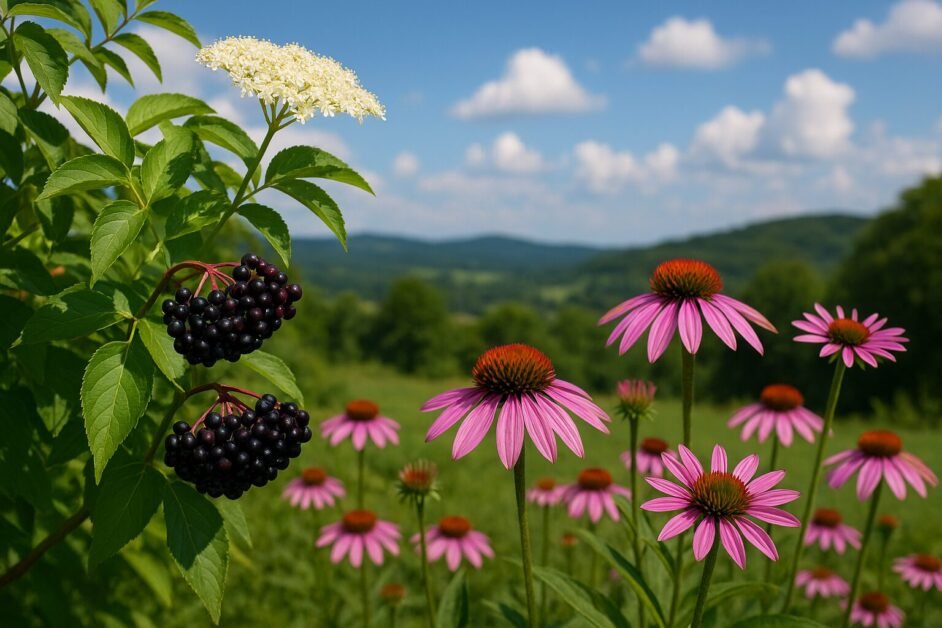
If you view your immune system as a security team, Echinacea is the loud, blaring alarm that wakes everyone up. Also known as the purple coneflower, this flowering plant is native to North America and has a rich history of use in traditional Native American medicine for treating infections and wounds. Today, it is one of the most popular herbal products in the United States.
How It Works: The Science of Stimulation
Unlike remedies that simply soothe symptoms, Echinacea is classified as an immune stimulant. Its primary goal is to activate the body’s non-specific immunity—your first line of defense.
Research suggests that Echinacea contains active substances, such as alkamides and polysaccharides, that boost the activity of white blood cells. Specifically, it may increase the production of macrophages (cells that “eat” and destroy invaders) and cytokines (chemical messengers that coordinate the immune response). By hitting this “alarm button,” Echinacea helps your body recognize and attack a virus before it has the chance to fully take hold.
The “Prevention vs. Cure” Debate
The effectiveness of Echinacea has been a subject of scientific debate for decades, largely because different studies use different parts of the plant (roots, flowers, or whole plant) and different species (E. purpurea vs. E. angustifolia).
However, the consensus among herbalists and many researchers is that timing is everything.
For Prevention: Some studies indicate that taking Echinacea preventatively can reduce the odds of developing a cold by up to 50%.
For Treatment: Once a cold is in full swing, Echinacea’s effectiveness drops significantly. A review by the Mayo Clinic notes that while it may slightly shorten the duration of a cold, it won’t stop a cold that has already settled in your chest.
Best Ways to Take It
To get the maximum benefit, most experts recommend taking Echinacea at the very first sign of illness—that initial tickle in the throat or feeling of fatigue.
Tinctures (Liquid Extracts): These are often considered the most potent form because they are absorbed quickly into the bloodstream. Many herbalists prefer extracts that create a tingling sensation on the tongue, which acts as a sign of high quality alkamides.
Teas: A warm cup of Echinacea tea can be soothing, though it may be less concentrated than a tincture or capsule.
Capsules: Convenient for travel, but quality varies greatly between brands.
Elderberry vs. Echinacea Contender 2: Elderberry (The “Security Guard”)
While Echinacea acts as the alarm, Elderberry plays the role of the security guard. Derived primarily from the European black elder (Sambucus nigra), these dark purple berries have been a staple in folk medicine cabinets for centuries to treat influenza and respiratory infections.
Unlike Echinacea, which focuses on waking up your immune system, Elderberry takes a more direct approach to handling the virus itself.
How It Works: The Science of Defense
The power of Elderberry lies in its high concentration of anthocyanins—the flavonoids responsible for the fruit’s deep purple pigment. These compounds are potent antioxidants that reduce inflammation, but their most impressive trait is their antiviral capability.
Research indicates that Elderberry compounds can physically interact with viruses. Specifically, they may inhibit a protein called hemagglutinin, which influenza viruses use to latch onto and enter your healthy cells. By “gumming up” these viral spikes, Elderberry essentially locks the doors of your cells, preventing the virus from entering and replicating.
A study published in the Journal of International Medical Research famously found that patients given Elderberry syrup recovered from the flu four days sooner on average than those given a placebo. This data supports the view that Elderberry is a viral interrupter.
Best Used For: Active Infection
Because its primary mechanism involves blocking viral replication, Elderberry is most effective when the virus is actively trying to spread through your body.
Symptom Reduction: It is widely celebrated for reducing the “misery” of a cold—helping to lower fevers, soothe headaches, and relieve sinus congestion.
Shortening Duration: As noted by Memorial Sloan Kettering Cancer Center, clinical trials suggest that Elderberry extract can significantly shorten the duration of influenza symptoms if started within the first 48 hours of feeling sick.
Common Forms and Potency
Because raw elderberries can be toxic (more on that in the safety section), they must always be cooked or processed.
Syrups: The most traditional and popular form. The thick, sugary consistency also helps coat a sore throat.
Gummies: A popular choice for children and adults who dislike the taste of medicine, though they often contain lower concentrations of the actual fruit extract compared to syrups.
Lozenges: Useful for delivering the extract directly to the throat tissues where the virus often first takes hold.
Elderberry vs. Echinacea Head-to-Head: The Breakdown
Now that we understand the unique science behind each botanical (elderberry vs. echinacea), it becomes clear that this isn’t necessarily a competition of “better,” but rather a question of “when.”
To visualize the differences, think of your body as a fortress. Echinacea is the army you send out to patrol the perimeter (Offense), while Elderberry is the barricade you put up once the enemy is at the gates (Defense).
| Feature | Echinacea | Elderberry |
|---|---|---|
| Primary Strategy | Stimulation (Offense): Activates white blood cells to hunt invaders. | Inhibition (Defense): Blocks viral proteins to stop them from multiplying. |
| Best Timing | Prevention: Daily during flu season, or the immediate moment you feel "off." | Treatment: Within 24–48 hours of full symptoms appearing. |
| Flavor Profile | Earthy, floral, and often slightly bitter or tongue-tingling. | Sweet, tart, and berry-like (often more palatable for children). |
| Typical Duration | Short-term bursts (1–2 weeks) are often recommended to prevent immune fatigue. | taken until symptoms resolve (usually 3–5 days). |
The Tactical Difference
The most distinct difference for the consumer is the biological goal.
Because Echinacea acts on the immune system itself, it is heavily dependent on your body’s current state. If you are already exhausted and your immune system is depleted, “whipping the horse” with a stimulant like Echinacea might have diminishing returns.
In contrast, Elderberry acts on the virus. This makes it a preferred choice for many during the peak of an illness when the goal is simply viral containment and symptom management. According to Harvard Health Publishing, while diet and lifestyle are the foundation of immunity, using targeted supplements at the right time can provide necessary support when defenses are breached.
Taste and Compliance
We cannot overlook the factor of taste.
Echinacea can be an acquired taste. Its natural bitterness often requires it to be masked in strong teas or swallowed as a capsule.
Elderberry is naturally delicious. This makes it far easier to administer to children (over age 1) or picky adults. However, this palatability comes with a catch: many commercial syrups are loaded with added sugars, which can actually suppress the immune system if consumed in excess.
Safety & Side Effects (Crucial Section)
While these remedies are plant-based, “natural” does not always mean “harmless.” Both Echinacea and Elderberry contain potent active compounds that can interact with medications or specific health conditions. Before adding them to your routine, it is vital to understand the risks.
Echinacea Warnings
Because Echinacea is an immune stimulant, it is not suitable for everyone.
The “Ragweed” Rule: Echinacea belongs to the Asteraceae family of plants, which includes ragweed, chrysanthemums, marigolds, and daisies. According to the National Center for Complementary and Integrative Health (NCCIH), if you have seasonal allergies to these plants, you are more likely to experience an allergic reaction to Echinacea, which can range from a mild rash to anaphylaxis.
Autoimmune Conditions: This is the most significant contraindication. Because Echinacea strengthens immune activity, it can potentially worsen disorders where the immune system is already overactive. The Mount Sinai Health Library explicitly warns that people with autoimmune diseases—such as Lupus, Rheumatoid Arthritis, or Multiple Sclerosis—should not take Echinacea without strict medical supervision.
Duration of Use: Some herbalists suggest that taking Echinacea continuously for more than 8 weeks may cause it to lose effectiveness, though modern research on this varies.
Elderberry Warnings
Elderberry is generally safe when prepared correctly, but it carries a unique risk that requires strict attention.
The “Raw” Danger: You must never eat raw elderberries, nor should you consume the leaves, bark, or roots of the plant. These parts contain cyanogenic glycosides—compounds that can release cyanide into the body.
Experts at the Missouri Poison Center note that consuming raw or unripe berries can lead to nausea, vomiting, and diarrhea.
Safe Use: Commercial syrups, gummies, and lozenges are processed to remove these toxins. If you make your own syrup, you must boil the berries thoroughly to neutralize the compounds.
Sugar Content: Because elderberries are naturally tart, commercial syrups are often heavily sweetened. If you are diabetic or monitoring sugar intake, read labels carefully or opt for sugar-free capsules or teas.
Pregnancy and Nursing
For both remedies, the data regarding safety during pregnancy and breastfeeding is limited. While many women use them without issue, most medical professionals recommend avoiding them or consulting an OB-GYN first to err on the side of caution.
The Verdict: Which Should You Choose?
After analyzing the science, safety, and mechanisms of elderberry vs. echinacea, the answer to “which is better?” isn’t a simple choice of one over the other. Instead, the winner depends entirely on timing.
Think of your immune strategy in two distinct phases:
1. The Prevention Phase: Choose Echinacea
If you are about to board a plane, sitting next to a coughing coworker, or feeling that vague sense of “run-down” fatigue, Echinacea is your best bet.
Why: Its primary strength lies in stimulating the immune system to be on high alert.
The Strategy: Take it for short durations (1–2 weeks) during high-risk periods to prime your defenses.
Expert Insight: According to Mount Sinai, Echinacea is most effective when used to “nudge” the immune system before a full-blown infection takes hold.
2. The Treatment Phase: Choose Elderberry
If you wake up with a fever, body aches, or a confirmed case of the flu, Elderberry takes the crown.
Why: Its ability to potentially inhibit viral replication makes it superior for damage control.
The Strategy: Start taking it within 24–48 hours of your first symptom and continue until you feel well.
Expert Insight: The Cleveland Clinic highlights that while research is ongoing, Elderberry is widely regarded for its potential to reduce the severity and length of flu symptoms if taken early enough.
The “Power Couple” Approach
You may notice that many pharmacy shelves feature products containing both Echinacea and Elderberry. Is it safe to combine them?
Synergy: Because they work via different mechanisms (one stimulates cells, the other blocks viruses), they are often viewed as complementary.
Usage: Many integrative health practitioners suggest a “stacking” method: using Echinacea to support the body’s fight while using Elderberry to keep the viral count low.
Note: Always check the dosage of combined products to ensure you aren’t getting a diluted amount of either ingredient.
Conclusion
Navigating the supplement aisle doesn’t have to feel like a guessing game. When it comes to the battle of Elderberry vs. Echinacea, the “winner” is simply the one that matches your current health status.
Reach for Echinacea when you need to call in the reinforcements—before you get sick or the moment you feel that first tickle in your throat.
Reach for Elderberry when the enemy is already inside the gates—to help shorten your misery and get you back on your feet faster.
However, remember that no supplement can replace the foundations of health. As the Centers for Disease Control and Prevention (CDC) highlights in their guide to enhancing immunity, adequate sleep, healthy nutrition, and stress management are the most powerful immune boosters available. Think of Echinacea and Elderberry as the “special forces” that support your body’s natural army, not a replacement for it.
Disclaimer: This article is for informational purposes only and does not constitute medical advice. Always consult with a healthcare professional before starting any new supplement regimen, especially if you are pregnant, nursing, or have an existing medical condition.
Q. Are these remedies safe for children?
A. Generally, yes, but with specific cautions:
Echinacea: Research suggests Echinacea may slightly reduce the chance of respiratory infection in children. However, some children may experience rashes or allergic reactions, so it should be used with care and under pediatric guidance.
Elderberry: The NCCIH Elderberry overview notes that while it has been used for flu symptoms, safety data is less robust for children than for adults. Always ensure you use a product specifically formulated for children to avoid dosage errors and ensure the berries have been properly processed to remove toxins.
Q. Can I take these supplements every day as a preventative?
A. It is generally not recommended to take Echinacea indefinitely. Many herbalists suggest a "pulsing" method (e.g., taking it for 2 weeks, then taking 1 week off) to prevent your immune system from building a tolerance. Elderberry is typically used acutely (when symptoms appear) rather than as a daily year-round multivitamin.
Q. 4. Do these replace the flu shot?
A. No. While Elderberry and Echinacea can support the immune system and help manage symptoms, they do not create the specific antibodies required to prevent influenza. They are complementary tools, not a substitute for vaccination.